Sustainable Personal Accounting

Master Your Personal Budget & Financial Planning with Clarity

Establish resilient routines, manage recurring outlays, and build structured allocations. Navigate shifting economic conditions with transparent tracking methods designed for long-term household stability.

Foundational Planning
Expense Tracking
Emergency Buffers
Monthly Habits
Spending Awareness
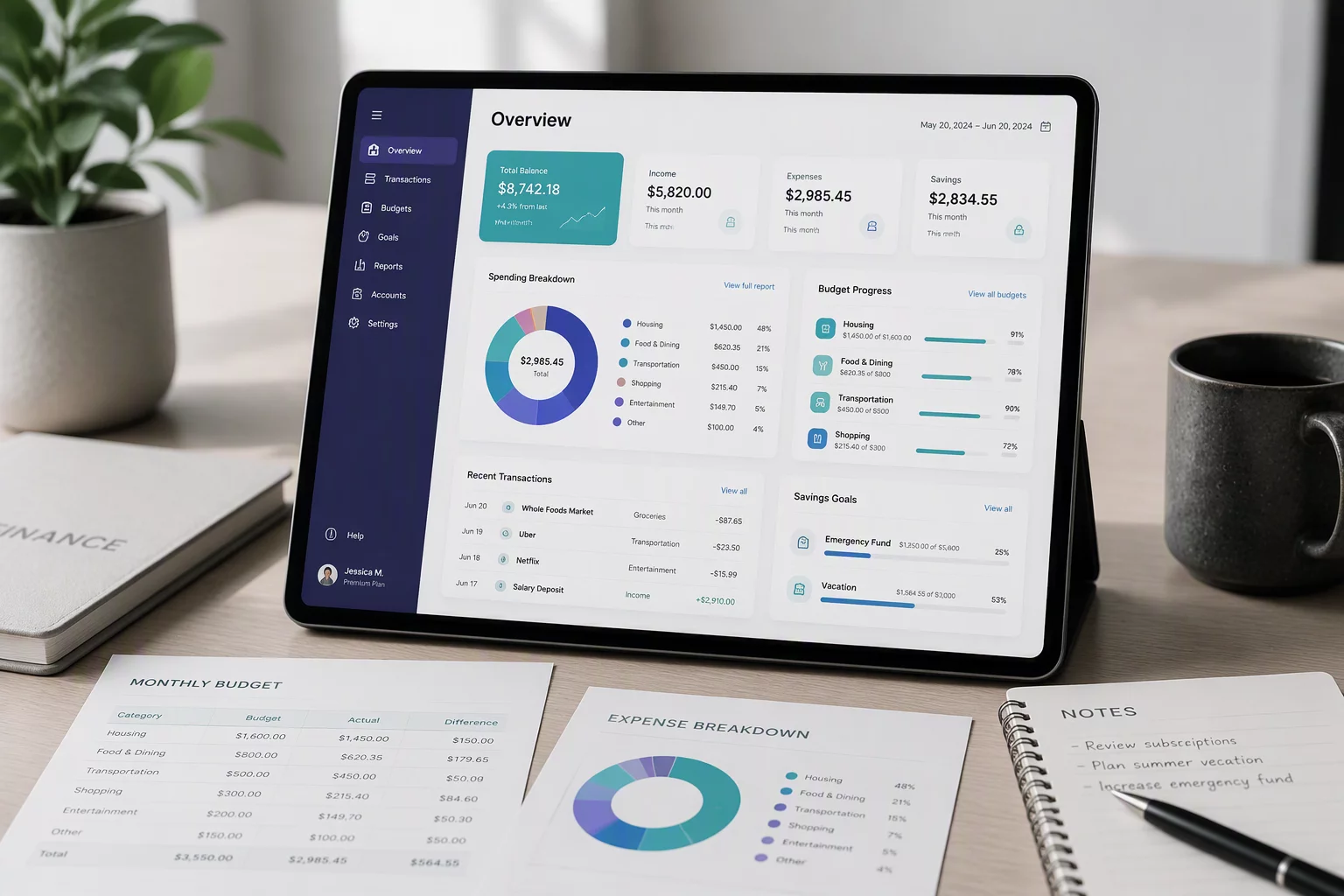
Personal budget overview dashboard
Allocation Monitor
Updated for current period
Architecture of Personal Finances

Essential Pillars of a Structured Personal Allocation Model

A dependable financial framework directs every unit of inflow into deliberate, functional partitions. Organizing allocations across five clear pillars builds resilience, prevents overspending, and establishes steady progress toward life aspirations.

1. Regular Inflows

Predictable personal earnings provide the foundational schedule for all downstream allocations. Establishing a baseline timeline prevents cash flow gaps and determines realistic spending capacities each calendar cycle.

2. Fixed Outlays

Non-negotiable obligations including residential housing, municipal utility obligations, standard transport passes, and essential insurance policies. These mandatory commitments form the essential baseline cost of living.

3. Variable Outlays

Flexible everyday expenditures covering fresh groceries, recreation, casual dining, and household maintenance. Active tracking in this category provides immediate flexibility when total monthly expenses must be adjusted.

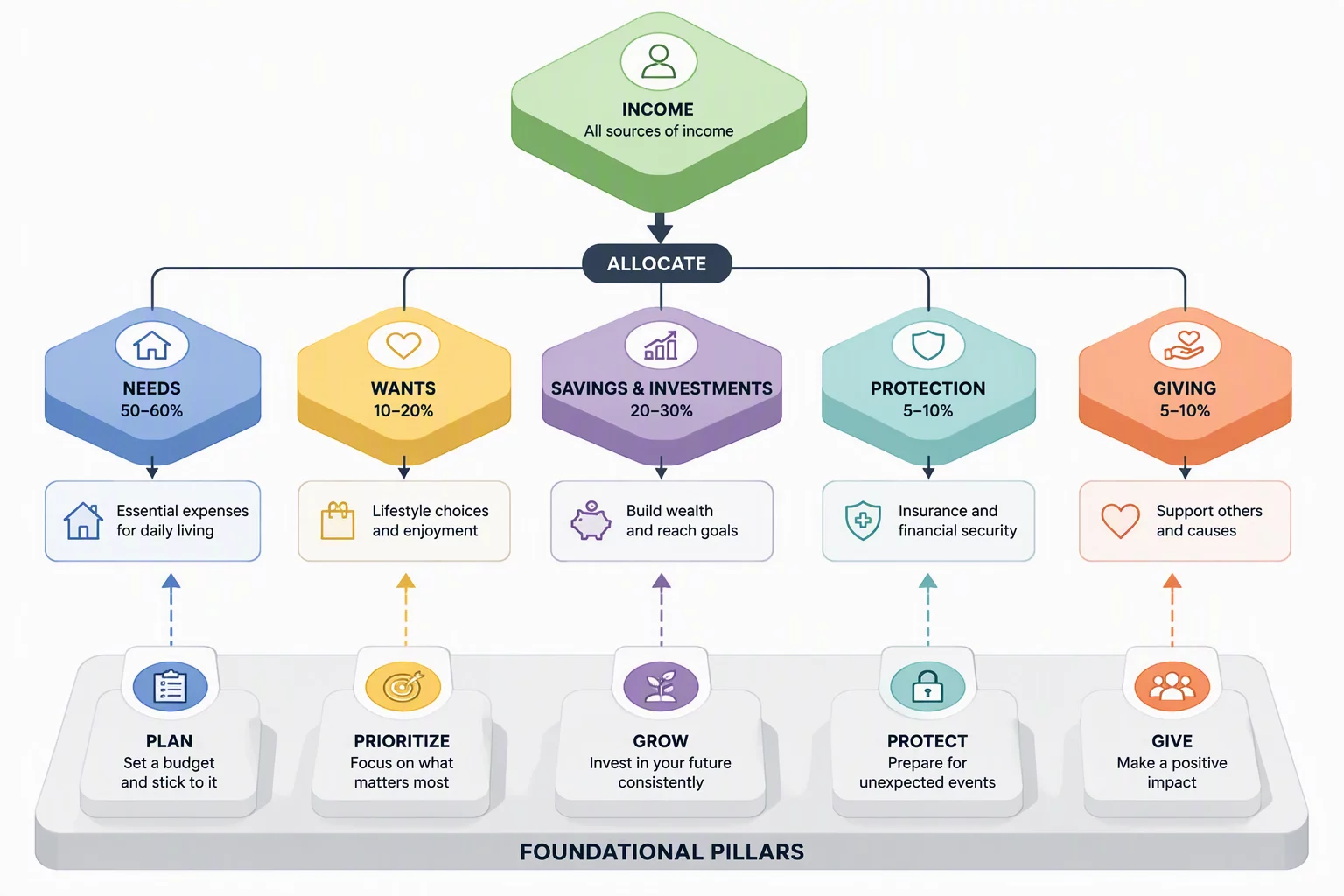
Budget structure allocation diagram illustration

Allocation Flow Distribution

Every inflow divides systematically between immediate sustenance, protective liquidity reserves, and forward-looking strategic allocations.

4. Reserve Fund

A dedicated liquidity cushion covering unforeseen events, urgent maintenance, or sudden income disruptions without breaking ongoing financial stability.

5. Long-Term Roadmap

Disciplined allocations set aside for future major milestones, asset modernization, continuing personal development, and enduring financial independence.

The Systematic Flow Architecture

Follow this orderly progression from initial inflow to structured preservation buckets.

01

Capture Inflow

Aggregate all predictable earnings on a set schedule.

02

Cover Essentials

Prioritize housing, utilities, and foundational fixed outlays.

03

Fortify Cushion

Direct a persistent percentage toward the reserve fund.

04

Fund Horizons

Assign leftover balance to lifestyle and long-term milestones.

Practical Frameworks

Real-Life Everyday Budgeting Scenarios

Explore eight structured case examples illustrating practical balance methods, expenditure audits, and proactive reserve systems designed for daily household resilience.

Establishing your first independent budget workspace with notebooks and balance charts
Scenario 01

Establishing Your First Independent Budget

Starting out on your own requires cataloging all recurring monthly obligations before committing to non-essential expenses. Separate fixed housing and utilities from variable grocery amounts. Allocate a conservative baseline buffer to absorb initial miscalculations without depleting core savings. Reassessing category boundaries every two weeks ensures ongoing adjustments stay manageable and grounded in realistic living patterns.

Step-by-Step FocusBaseline Setup
Managing rising household bills and utility receipts on a wooden table
Scenario 02

Managing Rising Monthly Expenses

When grocery receipts and utility rates climb simultaneously, immediate tactical adjustments prevent long-term strain. Begin by isolating discretionary lifestyle buckets such as dining and entertainment. Rebalance these savings directly into high-inflation utility line items. Conducting monthly consumption reviews highlights small behavioral efficiencies, preserving essential emergency reserves without sacrificing long-term personal stability.

Cost ControlDynamic Shifts
Planning for an appliance acquisition with a dedicated timeline calendar
Scenario 03

Planning for a Major Scheduled Purchase

Anticipating substantial appliance upgrades or home renovations requires creating an isolated sinking fund. Determine the exact timeline and divide the total target by the remaining pay cycles. Setting automated transfers right on payday removes the temptation to divert capital toward incidental wants. This structured approach guarantees zero disruption to essential monthly utility allocations.

Sinking FundsGoal-Oriented
Handling sudden mechanical repairs with an emergency ledger
Scenario 04

Handling Unexpected Urgent Outlays

Sudden home repairs or critical automotive maintenance can trigger immediate panic if unprepared. Activate your designated contingency buffer rather than tapping daily operating balances. Immediately after resolving the emergency, pause flexible secondary outlays for two billing cycles to replenish the safety reserve systematically, ensuring ongoing preparedness against future disruptions.

Safety BufferRapid Rebound
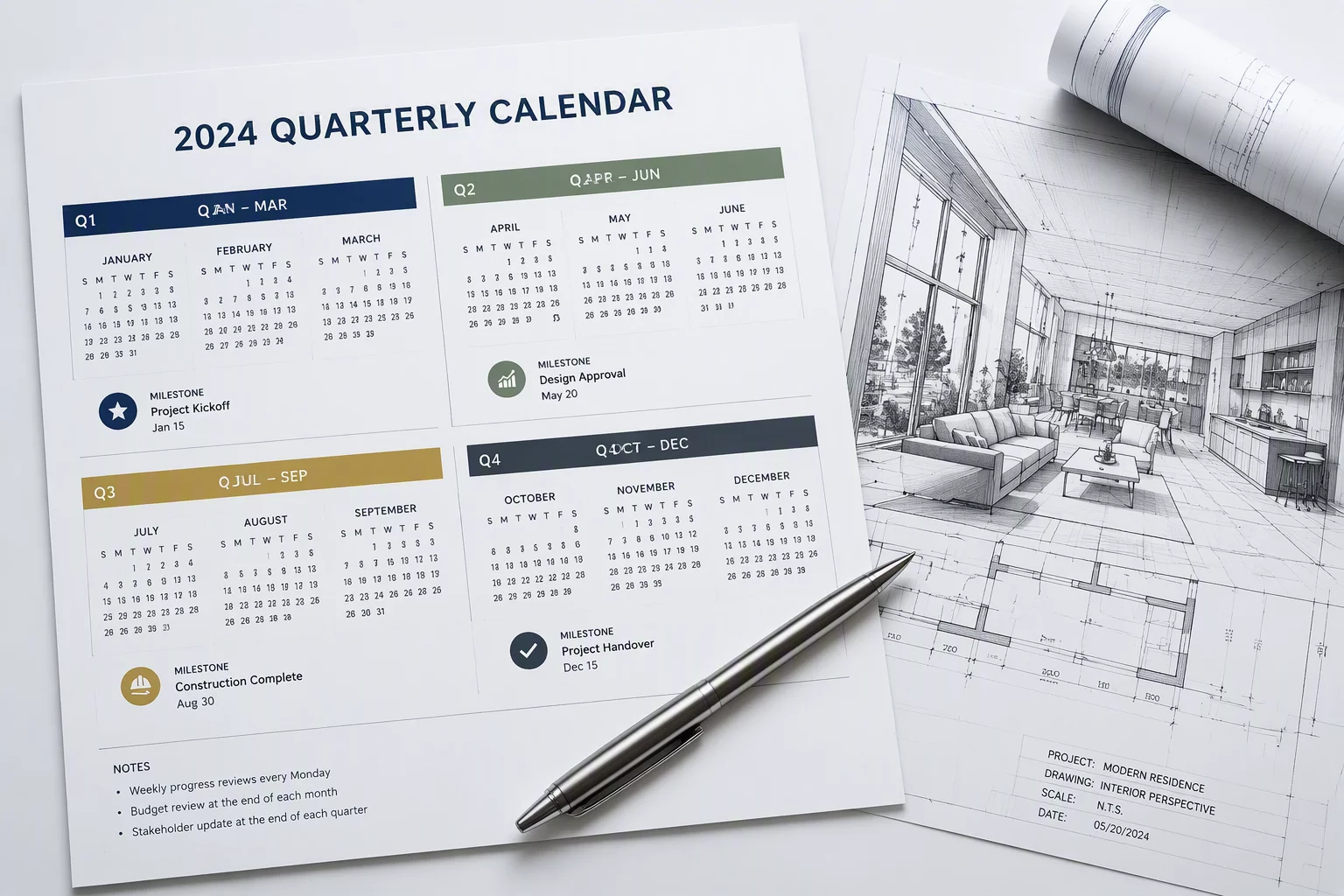
Digital audit of recurring media apps and digital service memberships
Scenario 05

Auditing Multiple Recurring Subscriptions

Digital memberships and streaming services slowly accumulate into significant monthly outflows. Print recent account statements and highlight all automated micro-charges. Cancel unused tools immediately and rotate entertainment packages sequentially rather than keeping multiple platforms active at once. This single audit frequently frees substantial capital each quarter for essential goals.

Leak AuditingQuarterly Review
Travel packing itinerary and dedicated holiday allocation envelope
Scenario 06

Structuring a Vacation & Holiday Fund

Seasonal travel should never compromise annual household stability. Construct an all-inclusive estimate covering transportation, lodging, meals, and unexpected regional activities. Direct fixed weekly increments into a separate sub-account well in advance. Returning home without post-trip strain ensures leisure remains rewarding rather than an enduring financial burden.

Planned LeisurePre-Funded
Two partners reviewing a shared ledger for household expenses
Scenario 07

Building a Harmonious Joint Household Budget

Coordinating finances between partners succeeds through clear transparency and shared responsibility. Establish a central account for rent, utilities, and domestic supplies funded proportionally to each earner. Maintain distinct personal allowances with zero mutual scrutiny. Regular monthly check-ins keep communication healthy and eliminate common misunderstandings.

PartnershipShared Goals
Professional planning a career transition with desktop notes and organizer
Scenario 08

Adapting to a New Financial Routine

Transitioning careers or shifting work arrangements alters compensation rhythms and auxiliary costs. Create a lean survival budget that strips out conveniences during the ramp-up phase. Recalibrate commute savings against revised tax parameters and healthcare contributions to maintain stability until your new schedule normalizes.

Career ShiftsLean Adaptation
Analytical Framework

Comparative Overview of Budgeting Methodologies

Evaluate structured allocation frameworks and tracking instruments to match personal accounting routines, time availability, and organizational habits.

Envelope / Zero-Based

Full category distribution
Ideal Use Case:Individuals requiring strict expense control and tangible boundaries
Complexity:Moderate
Time Needed:45-60 mins weekly
Primary Advantage: Eliminates unallocated spending leaks

50/30/20 Rule

Proportional allocation model
Ideal Use Case:Beginners seeking balanced high-level structure without micromanagement
Complexity:Low
Time Needed:15-30 mins monthly
Primary Advantage: Straightforward categories and low tracking effort

Digital Spreadsheets

Custom formula worksheets
Ideal Use Case:Analytical users who prioritize tailored reporting and offline data privacy
Complexity:High
Time Needed:30-45 mins weekly
Primary Advantage: Complete customization and total data ownership

Dedicated Tracking Apps

Synchronized cloud utilities
Ideal Use Case:Active multi-account holders desiring real-time automated ledger feeds
Complexity:Low - Moderate
Time Needed:5-10 mins daily
Primary Advantage: Automated categorization with instant cloud sync
Methodology Selection Principle
Select an instrument that matches regular accounting discipline rather than theoretical complexity.
Updated: 09/14/2026
Educational Masterclass

Why Deliberate Planning Helps Improve Control Over Everyday Expenses

Published: 08/28/2026 8 Min Read Analytical Framework

In modern household management, fiscal discipline often deteriorates not through massive single commitments, but via friction-free minor outflows that disperse capital unnoticed. Establishing consistent sovereignty over household resources demands an intentional framework rather than passive observation. By structuring expenditures proactively, individuals eliminate reliance on guesswork, align immediate choices with broad strategic objectives, and foster long-term stability.

1 Core Objectives and Psychology Behind Proactive Budget Allocation

The transition from reactive tracking to proactive allocation is fundamentally a psychological transformation. Traditional tracking reviews historical transactions post-execution, which generates retrospective regret without modifying behavioral triggers. In contrast, assigning every anticipated unit of capital to designated roles before disbursement creates clear intentionality.

Cognitive load diminishes significantly when expenditure limits are predetermined. Instead of negotiating purchasing decisions in real time amid emotional fatigue, consumers consult established limits. This deliberate friction transforms impulse into conscious consideration, ensuring that essential obligations, savings reserves, and discretionary allowances remain balanced without compromising personal priorities.

2 The Micro-Expense Trap: Why Minor Daily Purchases Slip Under the Radar

Modern commercial infrastructure is meticulously engineered to minimize transactional awareness. Contactless taps, digital wallets, and frictionless checkouts obscure the tangible perception of outlays. Consequently, minor recurring expenses such as convenience beverages, digital micro-services, and ad-hoc meal deliveries accumulate into substantial monthly drains.

Because single purchases appear insignificant individually, the human brain categorizes them as negligible risk events. Over thirty days, dozens of minor transactions produce an aggregate deficit that undermines core targets. Rigorous pre-planning counteracts this leakage by defining rigid category caps, compelling consumers to evaluate whether continuous convenience justifies substantial cumulative costs.

Key Takeaway: The Principle of Pre-Allocation

When resources receive predetermined assignments prior to calendar initiation, discretionary impulses are bounded by deliberate boundaries rather than momentary willpower.

3 Protocols for Systematically Logging Recurring Obligations

Fixed recurring outflows represent the foundation of any household architecture. These include residential leases, utility grid payments, insurance obligations, connectivity plans, and subscription bundles. While predictable, recurring commitments present vulnerabilities when distributed across varied billing dates throughout the calendar.

An effective protocol entails consolidating every fixed obligation into a centralized operational registry categorized by settlement cadence. Establishing dedicated sub-accounts for fixed commitments separates necessary overhead from discretionary funds. This structural separation guarantees that mandatory household obligations remain protected regardless of variable daily transactions.

4 Variance Analysis: Reconciling Planned Forecasts with Actual Outflows

Deliberate planning is incomplete without routine comparative analysis. Variance analysis compares original projections against empirical reality at scheduled intervals. Discrepancies reveal operational miscalculations, seasonal price variations, or unforeseen lifestyle changes.

Systematic variance identification prevents small deviations from snowballing into chronic shortfalls. When a category exhibits persistent negative variance, households must diagnose root causes: was the initial estimate unrealistically stringent, or did lifestyle inflation occur? Dispassionate data analysis replaces intuition with actionable clarity, guiding structural corrections.

Proactive Regimes

Targets determined beforehand, expenditures measured against predefined caps, dynamic adjustment based on empirical variance analysis.

Reactive Regimes

Spending dictated by momentary account balances, post-facto transaction scanning, persistent surprise at month-end discrepancies.

5 Systematic Principles for Periodic Monthly Budget Adjustments

A resilient budget is a flexible tool, not a static constraint. Rigid financial designs inevitably fail when confronted with unavoidable lifecycle unpredictability. Effective governance incorporates an iterative review cadence at the conclusion of each monthly cycle.

During this review, households reallocate surplus balances toward secondary stability reserves, recalibrate expanding variable categories, and adjust for upcoming seasonal anomalies such holiday travel or annual maintenance. By treating financial plans as evolving blueprints, households sustain structural control while gracefully accommodating real-world fluctuations.

Summary Conclusion

Sustained oversight of everyday finances is an active operational discipline. By acknowledging behavioral pitfalls, insulating fixed requirements, tracking systematic variances, and iterating monthly structures, households establish durable financial resilience.
Budget Leak Audit

Expenses That Easily Go Unnoticed

Small, recurring outflows often evade routine reviews while steadily eroding long-term savings capacity. Identifying these subtle drain points provides immediate room for structural fiscal improvements without disrupting essential lifestyle needs.

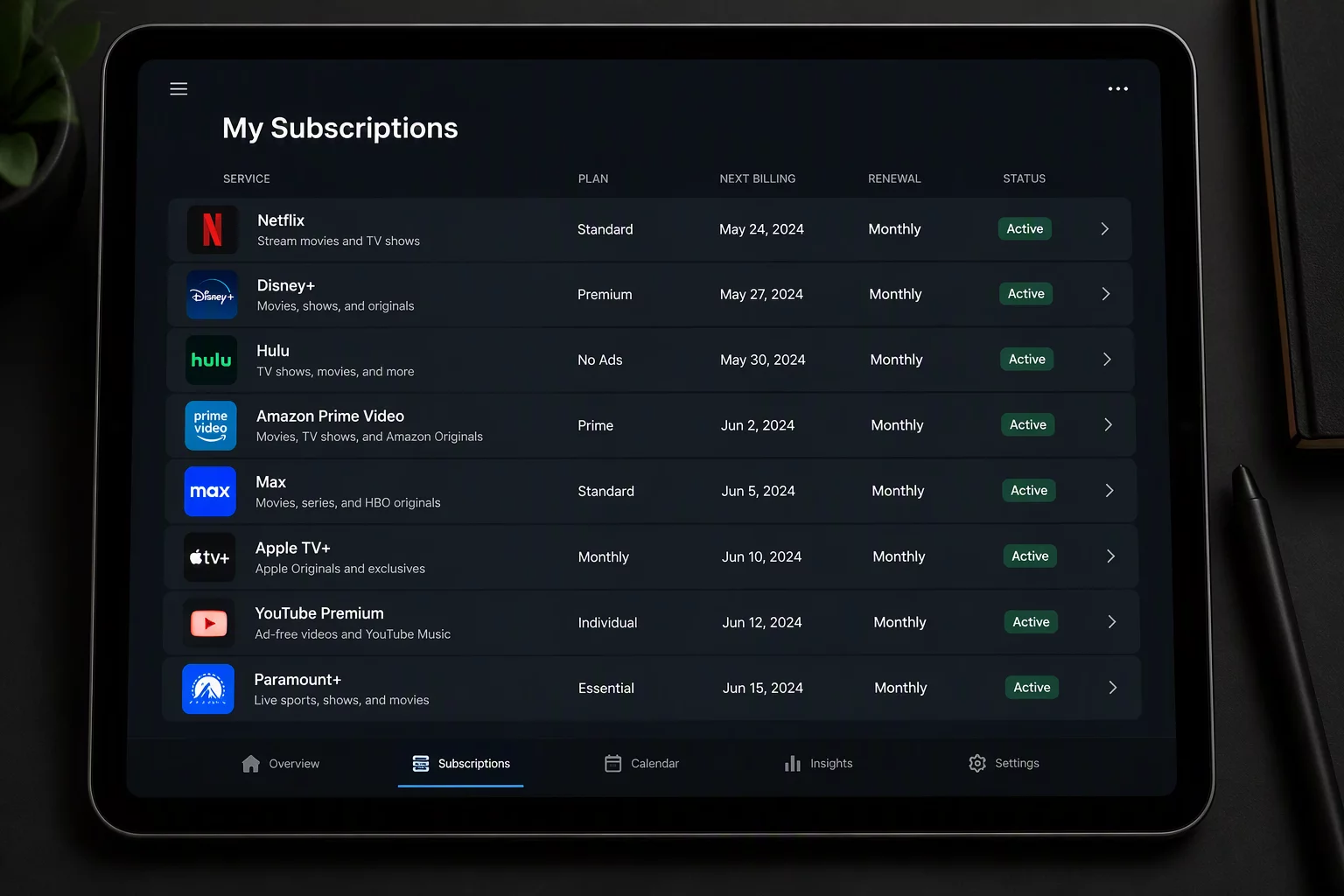
Recurring Digital Media

Inactive Digital Subscriptions

Unused streaming tiers, outdated software memberships, and forgotten cloud storage plans quietly bill payment profiles month after month without active utility.

Remediation Action

Conduct a dedicated monthly statement audit. Immediately cancel all digital services untouched for over thirty consecutive days.

Account Administration

Banking Charges & Maintenance

Routine account upkeep levies, out-of-network withdrawal charges, minimum balance penalty fees, and wire overhead quietly siphon primary reserves.

Remediation Action

Transition to fee-free account alternatives, configure minimum threshold alerts, and consolidate payment routing through zero-cost networks.

Impulse Routine Habits

Micro Recurring Purchases

Daily artisanal hot drinks, vending machine snacks, and minor discretionary treats seem inconsequential isolated, yet rapidly compound into substantial annual sums.

Remediation Action

Allocate a strict fixed weekly allowance for convenience treats and prepare staple beverages at home prior to daily travel.

On-Demand Services

Delivery & Convenience Fees

Third-party logistics surcharges, service platform adjustments, priority dispatch markups, and preset tip defaults inflate base checkout bills drastically.

Remediation Action

Batch order requirements together to avoid minimum surcharges, or choose self-pickup options whenever logistically practical.

Point-Of-Sale Additions

Ancillary Add-on Services

Extended product warranties, supplemental gadget protection riders, and unneeded express handling selections silently tacked onto transactions during checkout flows.

Remediation Action

Rely on standard manufacturer consumer protections or existing primary policies rather than accepting default retail service warranties.

Long-Interval Billings

Unchecked Annual Renewals

Yearly domain registrations, premium utility applications, and warehouse club renewals that bill automatically at non-promotional standard rates without prior confirmation.

Remediation Action

Disable automatic renewal toggles immediately upon initial setup and create calendar notifications two weeks prior to billing anniversaries.

Systematic Review

Essential Monthly Financial Habits

Establishing structured periodic routines ensures strategic clarity and prevents unexpected budget deficits. Implement this disciplined monthly checklist to maintain control over personal capital.

01

Monthly Recurring Obligation Audit

Inspect active recurring memberships, utility invoices, and recurring subscriptions. Cancel unutilized commitments promptly to eliminate unmonitored capital leakage across payment cycles.

02

Expense Calendar Mapping for Upcoming Outlays

Plot upcoming major obligations, scheduled maintenance bills, and annual policy fees onto the monthly schedule. Pre-allocating liquidity reduces financial pressure prior to due dates.

03

Clear Segregation of Outlays

Categorize all disbursements into strict essential needs and optional personal wants. Enforcing clear structural boundaries ensures fundamental necessities are perpetually safeguarded first.

04

Month-over-Month Outflow Variance Review

Measure actual disbursement numbers against previous benchmarks to spot irregular spikes. Detecting lifestyle expansion early enables timely course adjustments before imbalances grow.

05

Automated Emergency Reserve Replenishment

Verify that scheduled transfers to primary safety cushions operate seamlessly without manual friction. Regular deposits sustain critical defensive reserves during volatile economic periods.

06

Dynamic Calibration of Spending Thresholds

Adapt category spending caps according to macroeconomic price shifts and seasonality changes. Realistic parameters ensure your monthly fiscal framework remains resilient and sustainable.

Newsletter

Get fresh planning notes in your inbox

Receive practical budget prompts, seasonal review ideas, and household finance analysis from Vaultnixorq.